
Biggest immediate impact
Exhibition A
- Inspiring88%
- Disturbing74%
- Provoking61%
Immediate score8.9/10
A new home for your museum visits
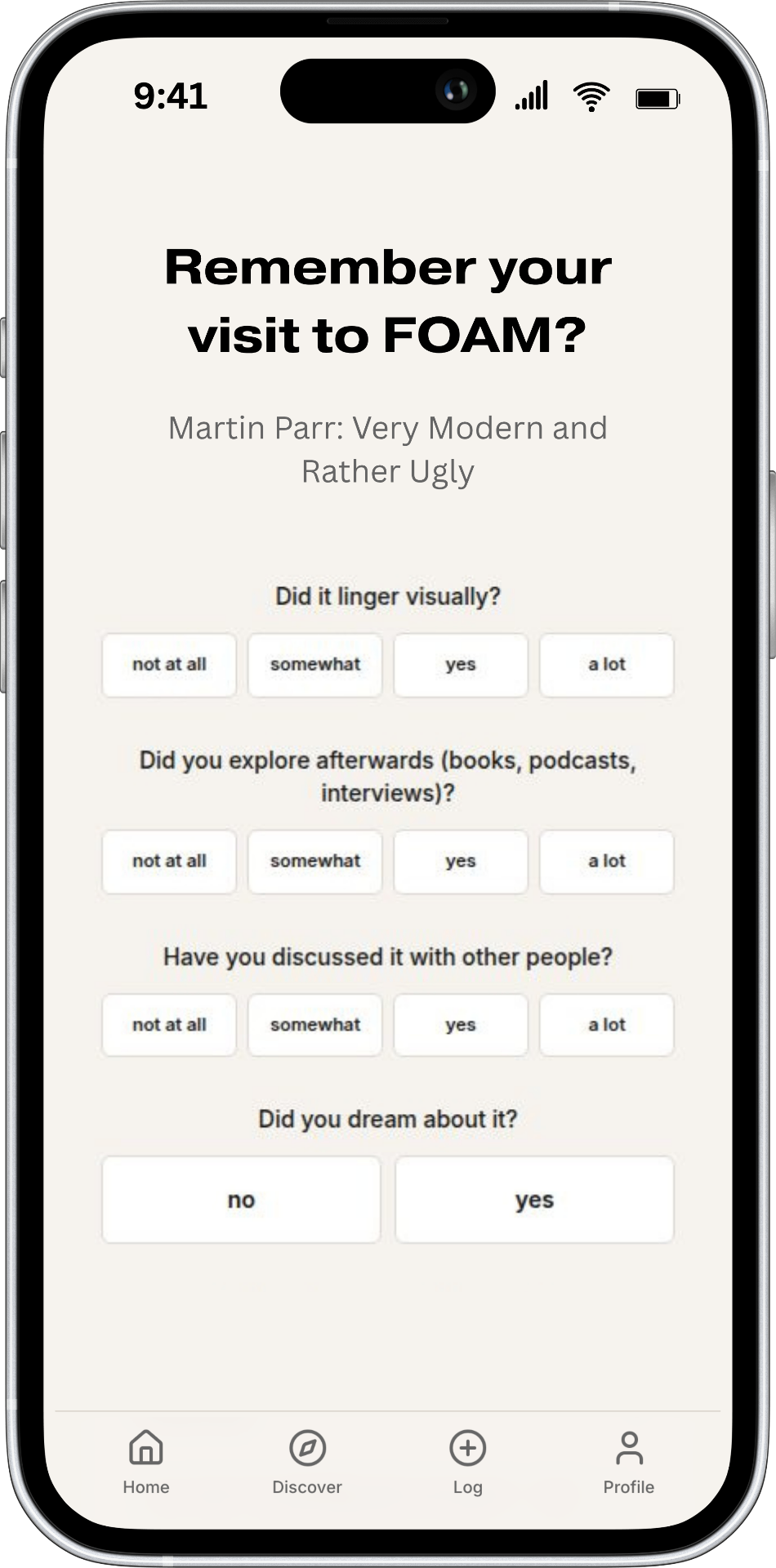
Echo Room is a free space for art lovers to log their museum visits, organise photos by exhibition, and share experiences with friends — without ads, algorithms, or performance metrics. A place to reflect on art, not review it.
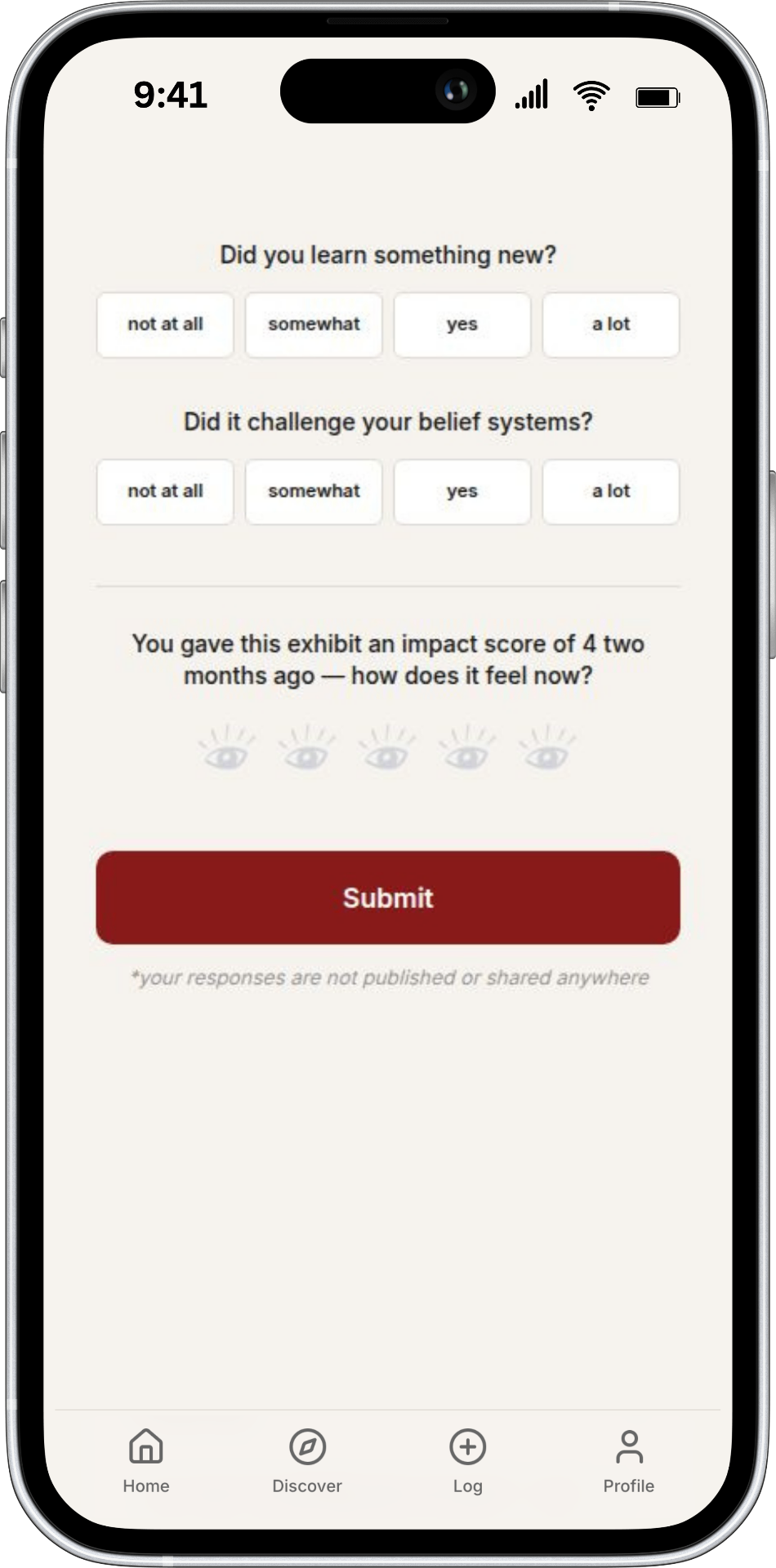
The premise is simple: log your experience after a visit, return eight weeks later, and find out what stayed. The anonymised dataset that builds from those two moments is something the cultural sector has never had: longitudinal evidence of what art does to people after they leave.
Visitors have a free, ad-free space to log and reflect on their museum experiences — building a personal record of what moved them and what stayed. They can upload photos of their favourite pieces of the exhibition, creating their very own art diary. The instrument also allows them to recommend exhibits to friends, creating a social space without algorithmic intervention.
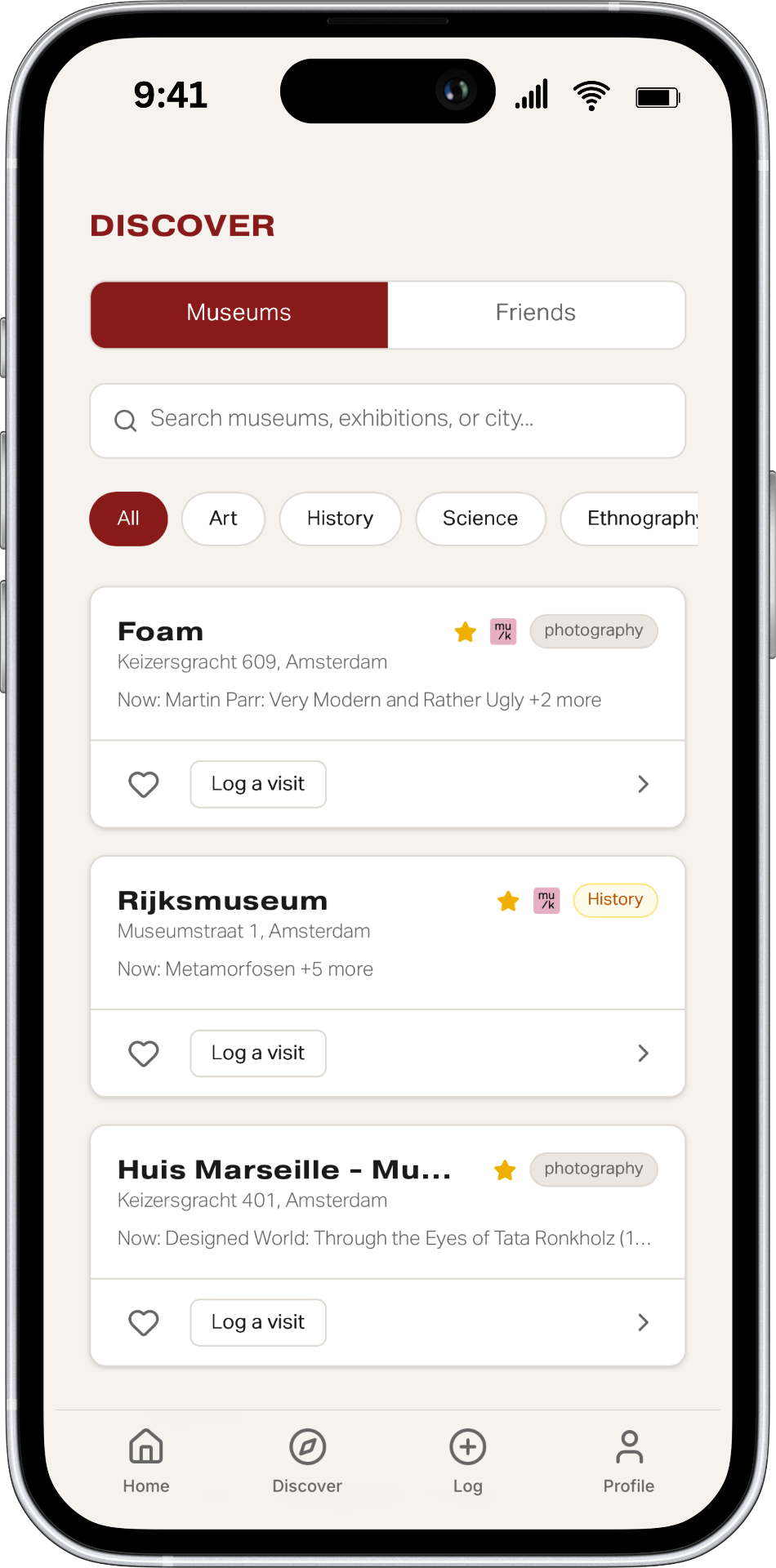
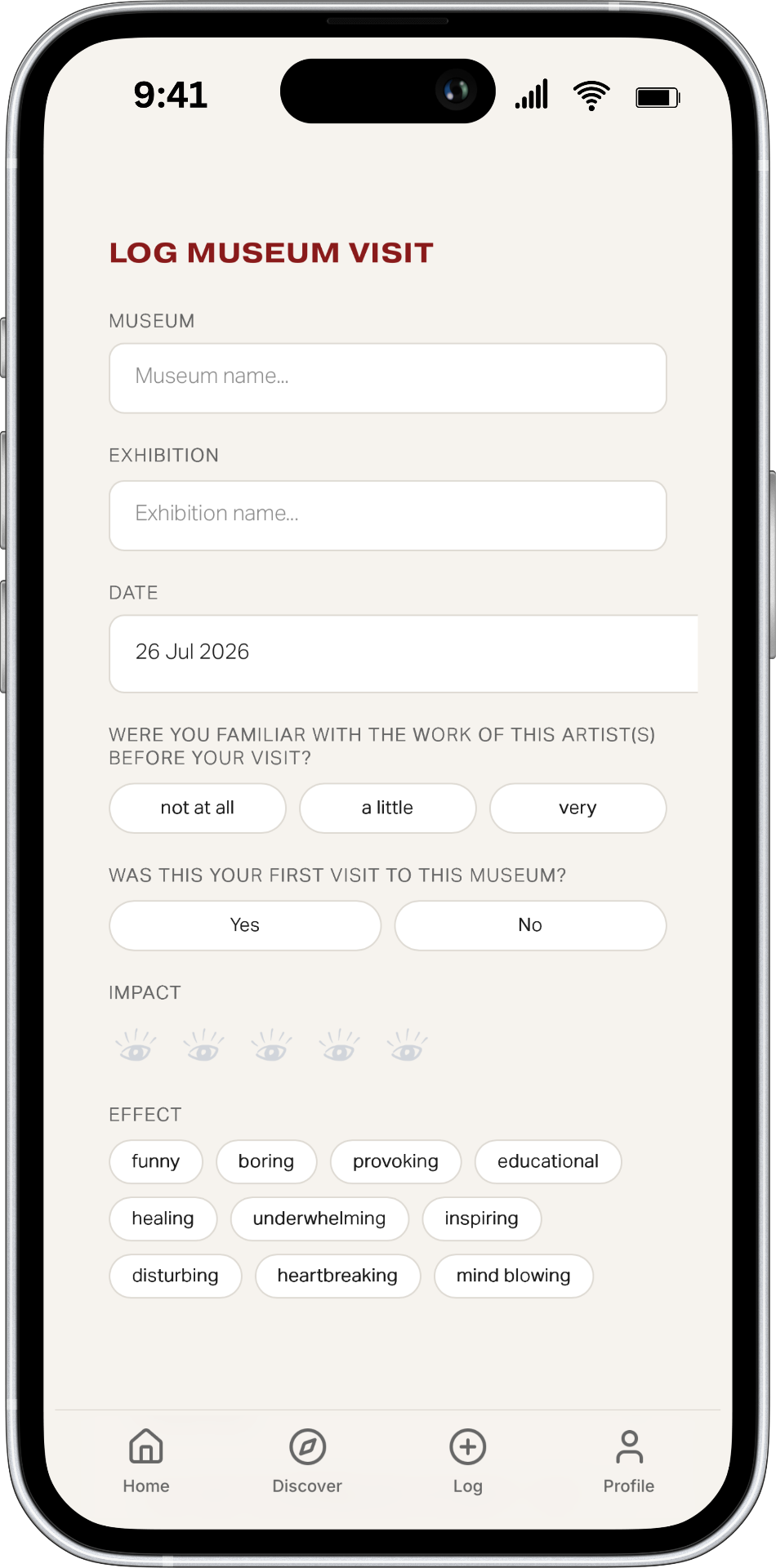
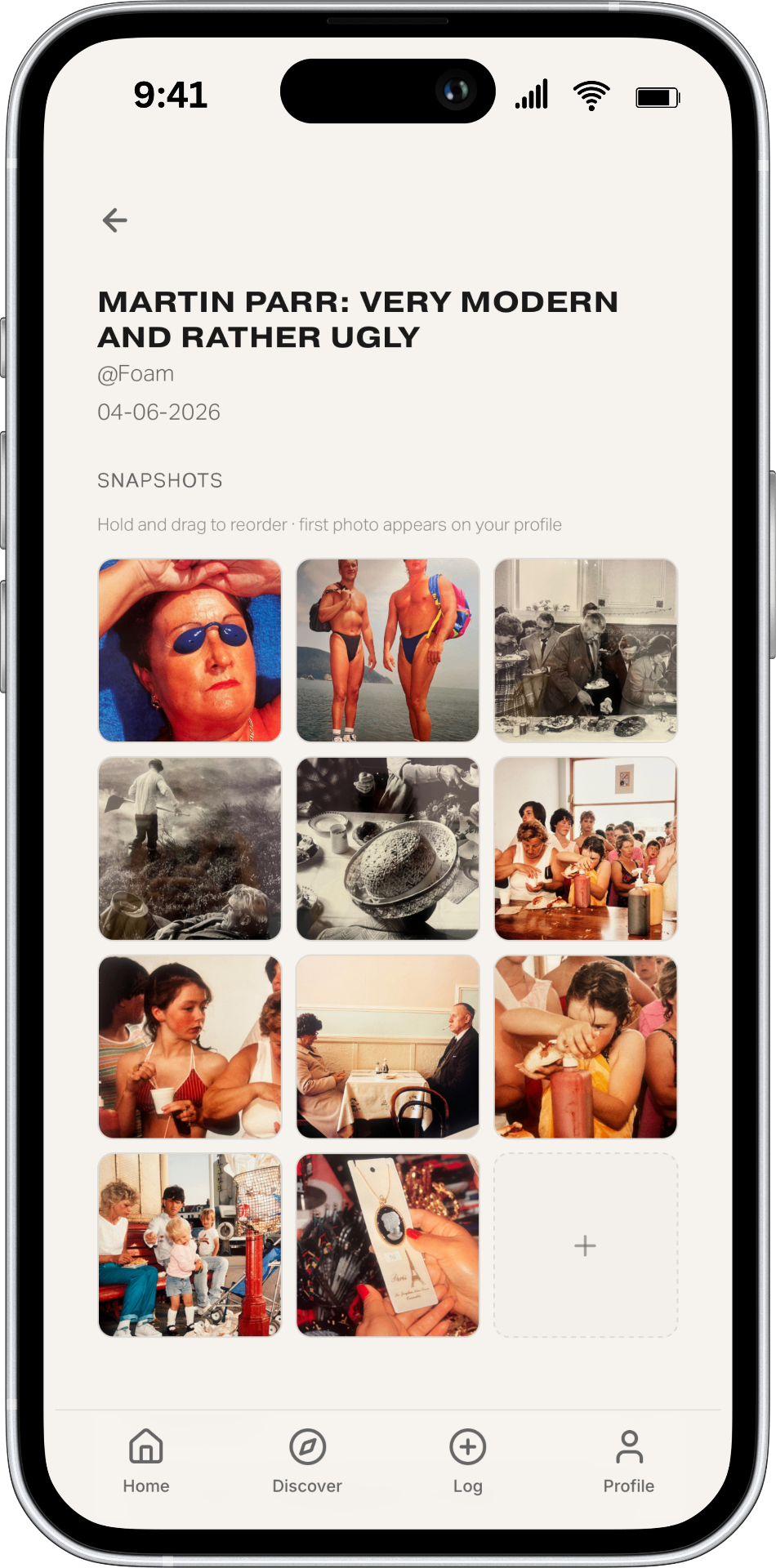
The corresponding dataset is used to analyse the long-term effect of museum visits. Only anonymised, aggregate data is used for analysis. No personal data is ever shared or sold to anyone.
Echo Room is an independent empirical research project investigating what museum visits do to people over time. Participants log their immediate experience after an exhibition, and return eight weeks later to record what stayed visually, emotionally, and behaviourally.
That act of reflection, repeated across visits, generates a dataset that has never existed before: a longitudinal record of art's long-term cultural impact.
Museum-level findings go to the institutions that generated them — anonymised and privately reported.
Museums can see which exhibitions truly resonate and how experiences linger over time. Unlike generic attendance data, this lens links feeling to behaviour, helping institutions refine curation, visitor engagement, and communication strategies. It's a living feedback loop between art and audience — turning emotional response into strategy.
Biggest immediate impact
Exhibition A
Biggest echo score
Exhibition B
Most polarising
Spread of responses
Some exhibitions unite audiences. Others divide them.
Highest rating increase
Exhibition B
Visitors rated it higher in retrospect, the exhibition grew in memory.
Biggest rating decrease
Exhibition A
Visitors rated it lower in retrospect, the exhibition faded.
Critics vs. visitors
Exhibition C
*Illustrative data — hypotheses to be tested
Sector-level findings are published openly, through academic journals and our annual Echo Report.
Individual museums see their own visitors. Echo Room sees the sector. Aggregated across institutions, exhibition types, and visitor profiles, the dataset generates findings that no single museum could produce alone — on belonging, on cultural participation, on what kinds of experience do the most lasting cultural work. Evidence the sector has been arguing from conviction. Now arguable from data.
Echo retention by museum type
Prior knowledge & effects
Familiarity makes the visit land harder immediately.
Prior knowledge & effects
Visitors with no prior knowledge of an artist retain the experience more strongly eight weeks later.
*Illustrative data — hypotheses to be tested